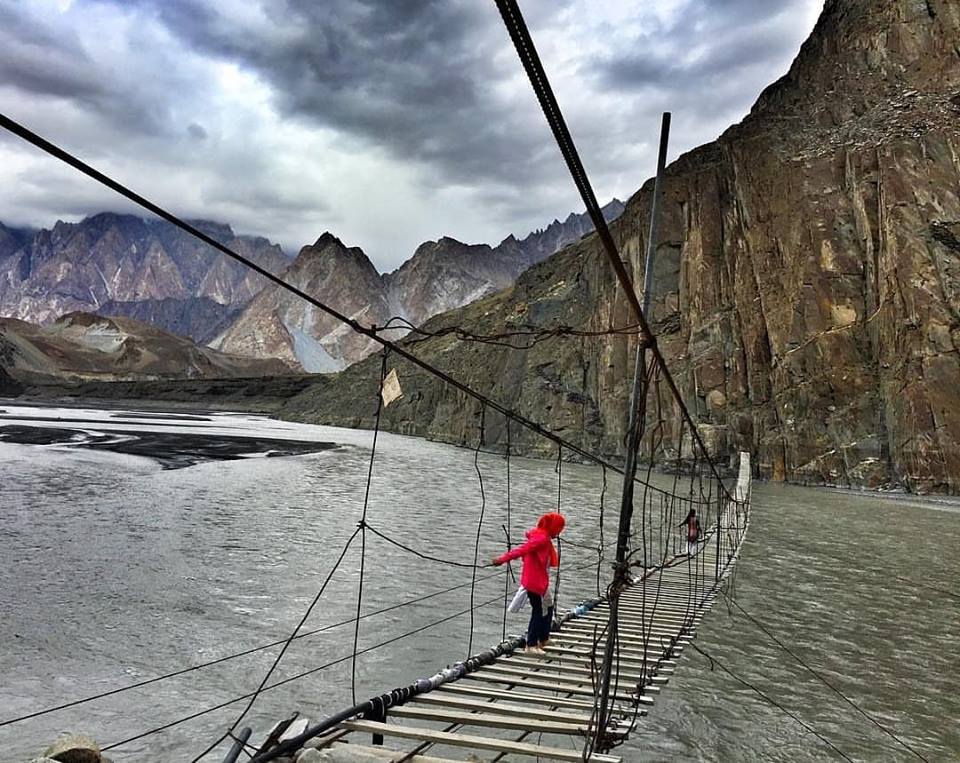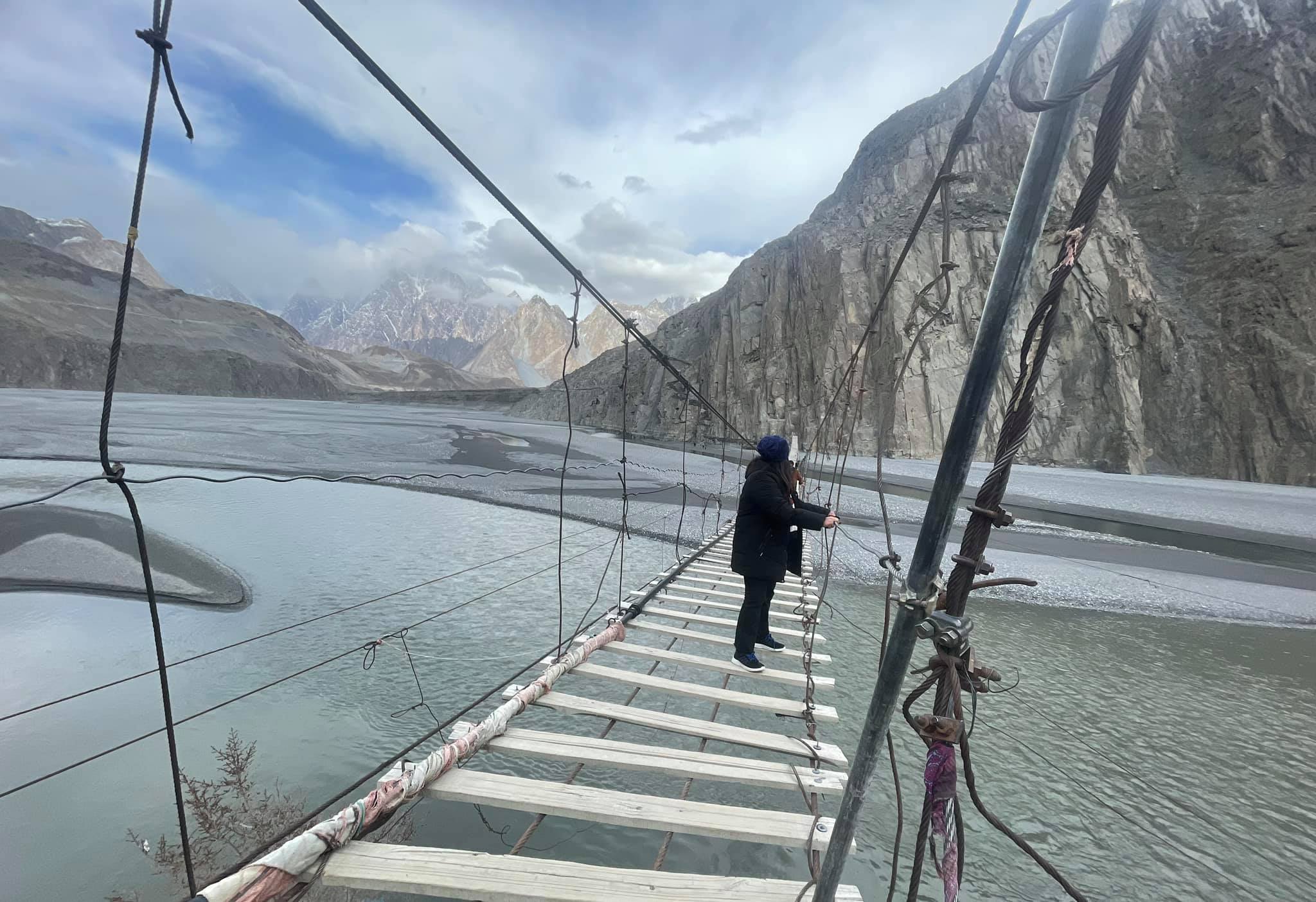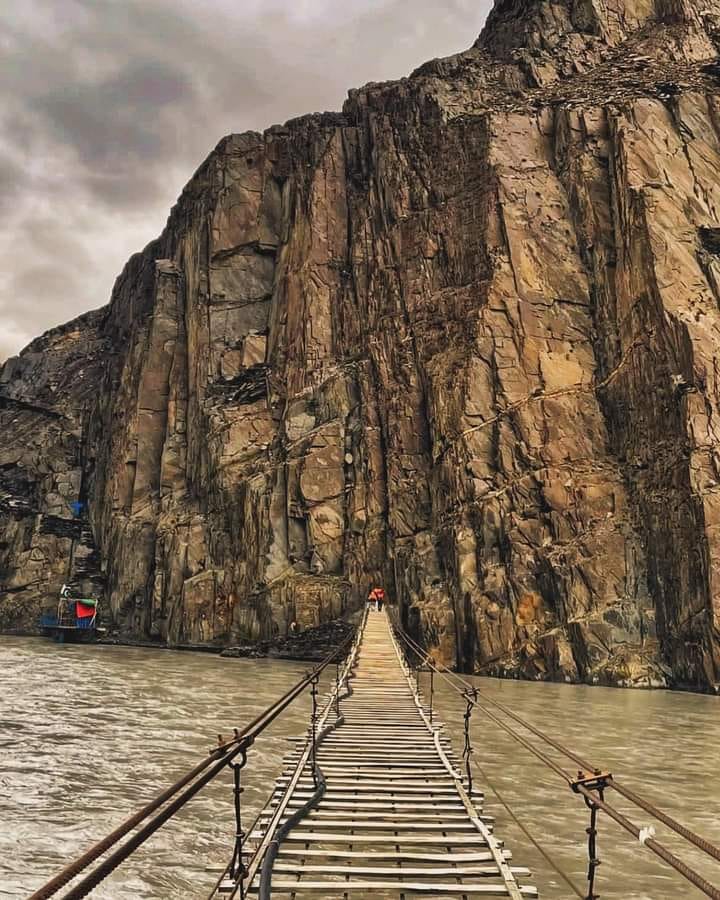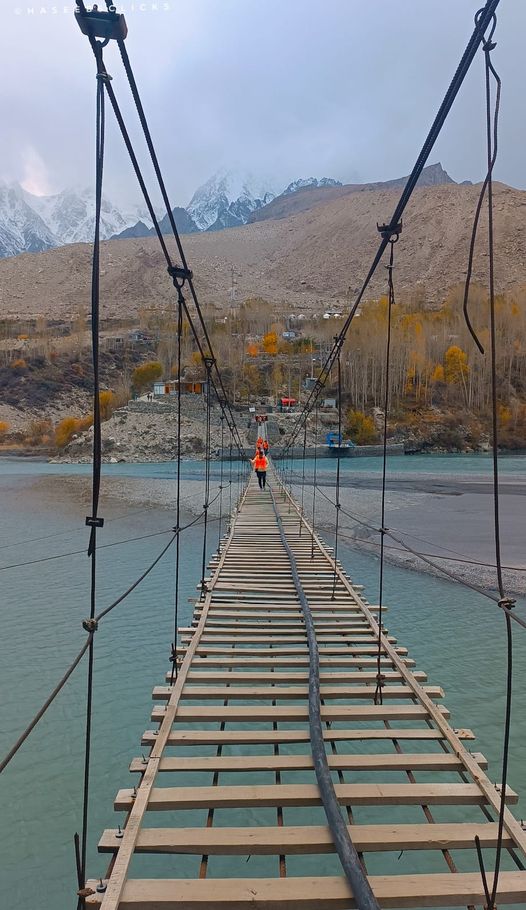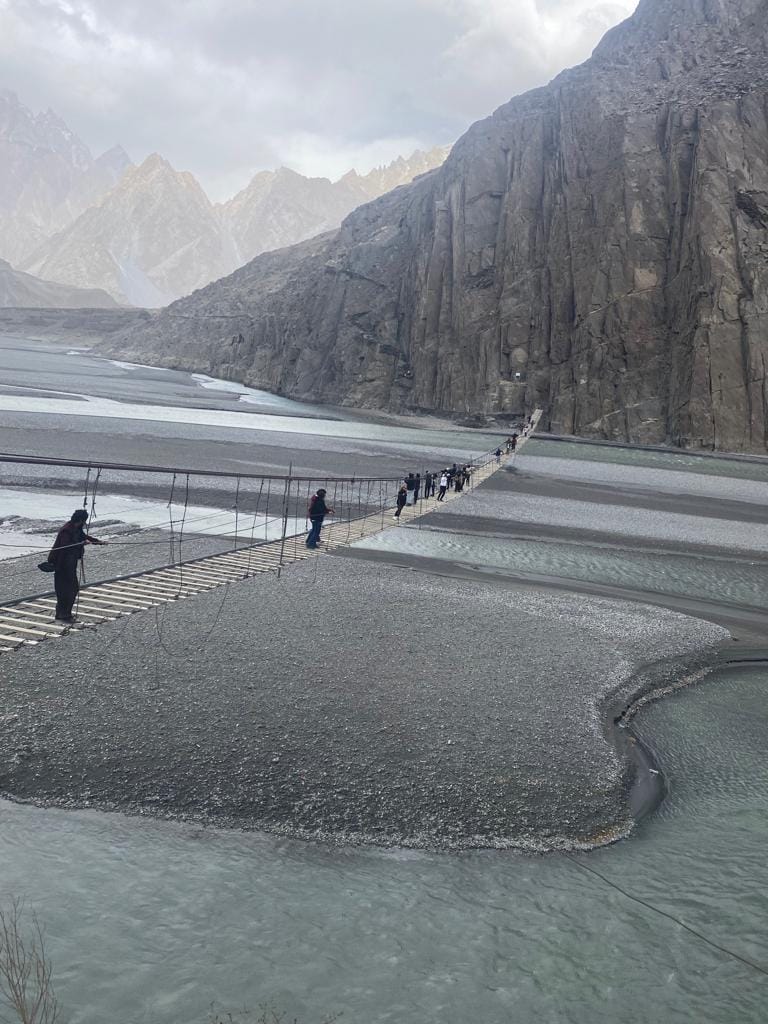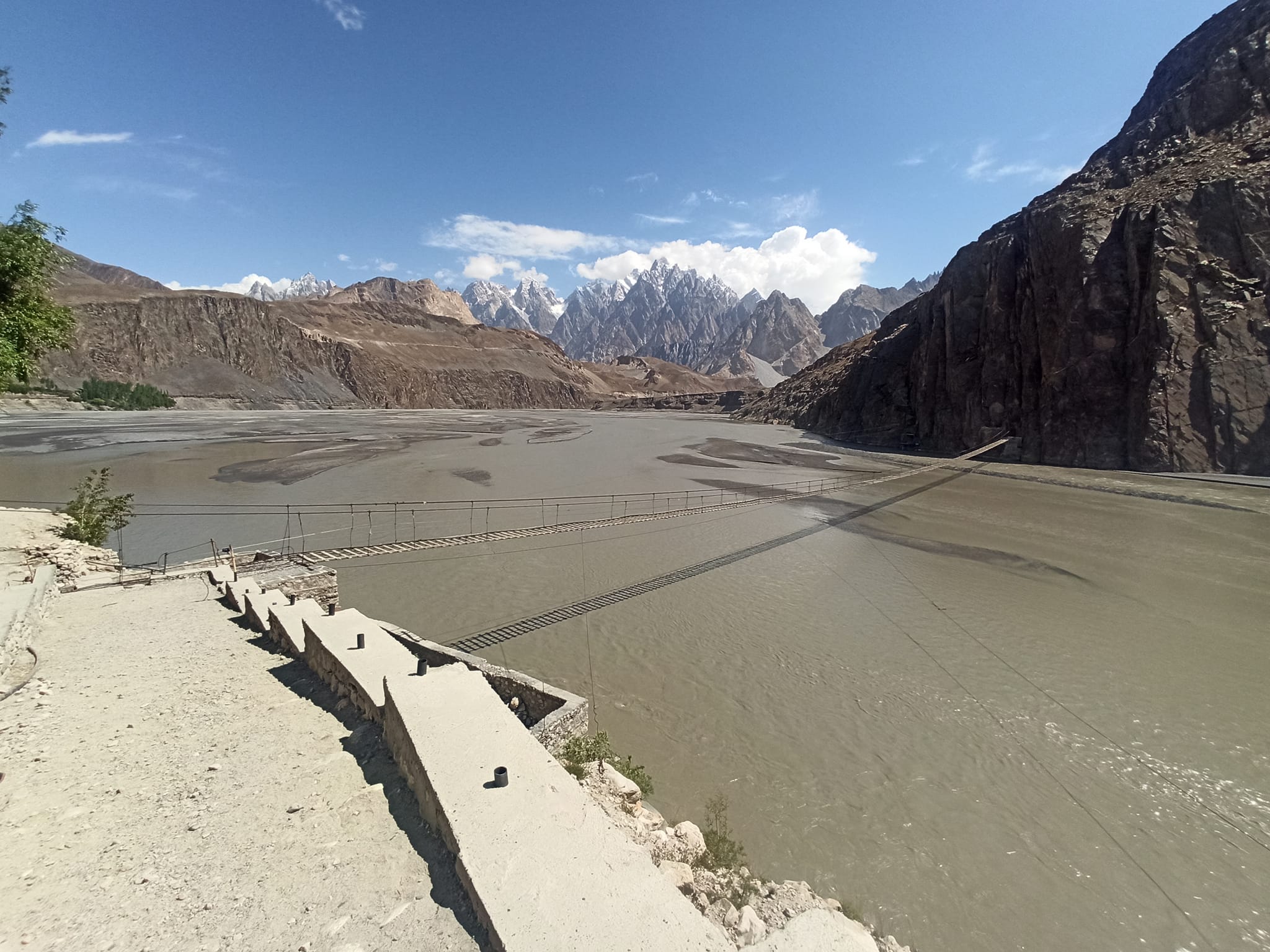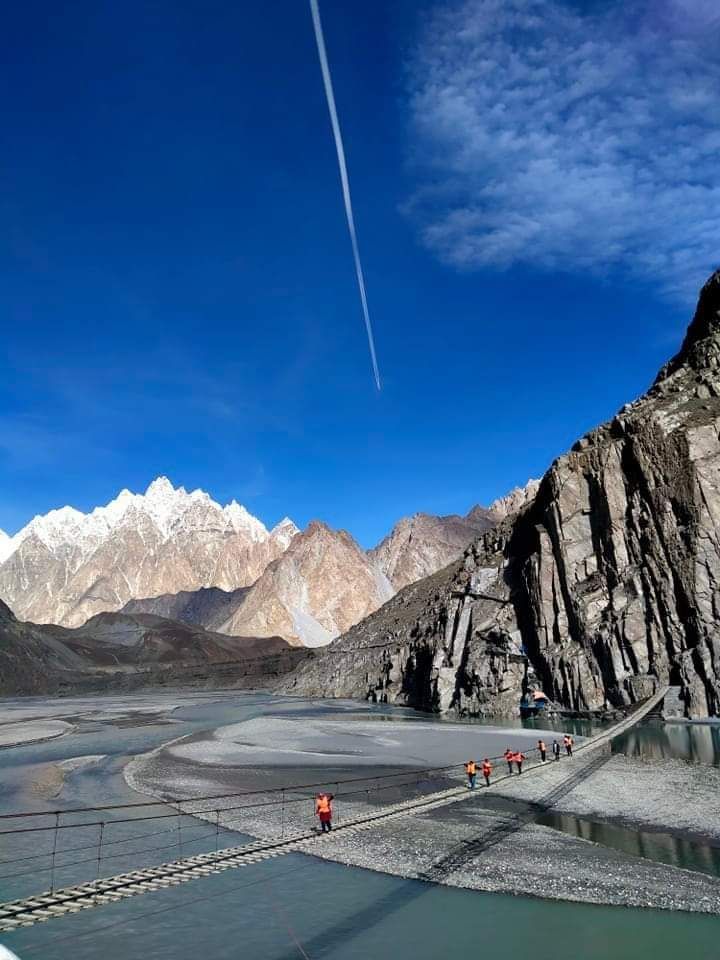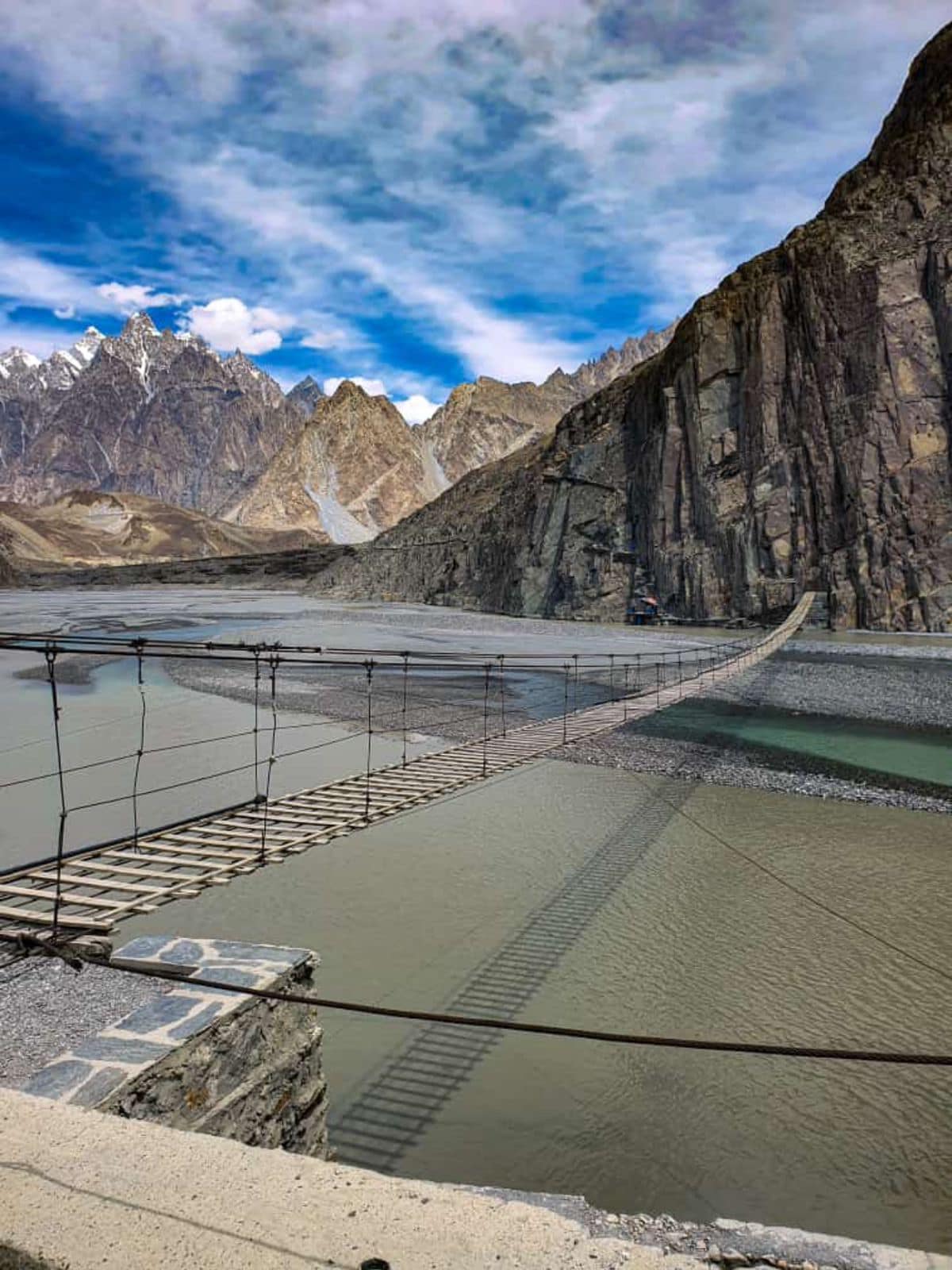
Wooden planks, steel cables, and ropes weave together to form the thrilling 635-foot-long Hussaini Suspension Bridge, stretching across the breathtaking Hunza River in the upper Hunza region of Gilgit-Baltistan, Pakistan. This bridge links the villages of Hussaini and Zarabad, hanging dramatically above the vibrant blue waters of the Hunza River. Gaps where wooden planks are missing make every crossing an exciting challenge, and the bridge sways noticeably as people cross.
The bridge has earned global fame for its aged, precarious look, yet it remains reliably functional. Locals cross it daily, embracing its history, while tourists are drawn by the thrill and challenge of its sway. Although newer, safer bridges stand nearby, the original Hussaini Suspension Bridge holds a special place in the region. Adventure seekers flock to northern Pakistan to conquer this celebrated crossing.
Hussaini village is located in the upper Hunza region of Gilgit-Baltistan at an elevation of approximately 2,700 meters above sea level. Positioned along the Karakoram Highway, Pakistan’s primary route to China, the village remains relatively accessible despite its remote mountainous environment. The Hussaini Bridge is a popular tourist destination in Hunza and is part of Asia’s first plastic-free zone. It is located in Gulmet, Hunza, Pakistan.
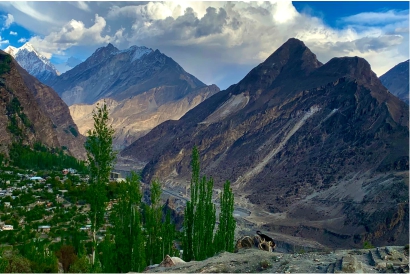
Prominent mountains, including the Passu Cones, Shispare, and the Batura glaciers, surround Hussaini. The village serves as a starting point for various treks and is situated adjacent to the Hunza River. The river has influenced both settlement patterns and the landscape for centuries.
This bridge, around 30 years old, was recently restored by local authorities. It’s a border crossing between two villages on the outskirts of town. In Pakistan, the longest pedestrian bridge exists. The most astounding thing to accomplish before making your final touch at Hussaini Hanging Bridge, Hunza, is to submit your memory.
Hussaini Suspension Bridge is situated approximately 75 kilometers north of Karimabad, the central hub of Hunza Valley. The journey from Karimabad to Hussaini typically requires 2 to 2.5 hours via the Karakoram Highway. Actual travel time may vary depending on road conditions and the frequency of stops for viewing the scenery.
The route offers scenic views, passing through villages such as Gulmit and Passu, and providing sights of glaciers, mountains, and the Hunza River. Most tourists visiting Hunza include a visit to the Hussaini Suspension Bridge on a day trip or a multi-day tour exploring the attractions of upper Hunza.
Reaching the Hussaini Suspension Bridge requires first traveling to Gilgit-Baltistan. From Islamabad, travelers may either drive the Karakoram Highway, a journey of 20 to 24 hours depending on road conditions, or fly to Gilgit, a one-hour flight, followed by a three-hour drive to Hunza.
From Karimabad or Aliabad in central Hunza, visitors typically hire a local taxi or join a tour group traveling to upper Hunza. The bridge is situated just off the Karakoram Highway near Hussaini village. Signage may be limited, so directions are often obtained from local residents. Vehicles can be parked near the bridge, with a short walk to the starting point.
The Hussaini Suspension Bridge has gained a reputation as one of the world’s most dangerous bridges, attracting adventure seekers who seek challenging experiences. Its notoriety is attributed to several factors, including its dramatic appearance with missing planks and frayed ropes, the striking backdrop of snow-capped mountains and the Hunza River below, and the intense sense of excitement associated with crossing it.
Photography enthusiasts are drawn to this location to capture images of the bridge set against the dramatic Hunza landscape. The popularity of the bridge has been further amplified by social media, where numerous travelers share their experiences. The bridge exemplifies the intersection of natural beauty, cultural significance, and adventure tourism characteristic of Pakistan’s northern regions.
The Hussaini Suspension Bridge extends approximately 635 feet (194 meters) in length and is suspended about 100 feet above the Hunza River. The structure is supported by steel cables, with wooden planks forming the walkway and rope mesh serving as handrails.
The choice of materials reflects the resourcefulness required in this remote mountainous region. The wooden planks are spaced unevenly, with several missing entirely, creating gaps that reveal the river below. The steel cables appear weathered, and the rope handrails sway significantly in strong winds. These factors contribute to the bridge’s intimidating appearance.
The Hussaini Bridge exemplifies traditional suspension bridge engineering, commonly used in mountainous regions worldwide. The fundamental principle involves anchoring cables to secure points on both sides of the river and suspending the walkway from these main cables using vertical supports.
This design enables the bridge to span significant distances without intermediate supports, which is essential for crossing deep river gorges. The bridge’s movement and flexibility, while potentially unsettling to users, enhance its resilience against strong winds and frequent seismic activity in the region.
Although the design is simple, the bridge has demonstrated remarkable durability, functioning effectively for decades with minimal maintenance.
Hunza Valley contains several suspension bridges; however, the Hussaini Suspension Bridge is particularly notable for its dramatic appearance and photographic appeal. For example, the Passu Suspension Bridge is newer and in better condition, but the Hussaini Bridge’s worn state offers a more intense and authentic experience.
The newer concrete bridges in the region provide reliable and safe passage, but they lack the sense of adventure associated with the Hussaini Suspension Bridge. The combination of extreme conditions, such as missing planks, significant swaying, considerable height, and length, alongside the surrounding natural beauty, distinguishes this bridge. No other bridge in Hunza attracts comparable attention or fascination, particularly on social media platforms.
The safety of the Hussaini Suspension Bridge is a common concern. The bridge appears weathered, with numerous missing planks, worn ropes, and significant movement during crossing. Nevertheless, thousands of tourists traverse the bridge each year without incident when exercising appropriate caution.
The main supporting cables appear structurally sound, and the bridge has remained intact despite its appearance. However, crossing is not recommended for individuals with mobility challenges, severe vertigo, or heart conditions.
A newer, structurally sound bridge is nearby, providing a safer alternative for visitors who wish to experience the area without risk. Local authorities have discussed installing safety measures, but the bridge remains largely in its natural state. Crossing should only be attempted in good weather, during daylight hours, and never when the bridge is crowded or if you feel uncomfortable.
If you choose to cross the Hussaini Suspension Bridge, adhere to the following safety guidelines. Wear sturdy hiking shoes with a reliable grip instead of sandals or flip-flops. Test each plank before applying your full weight, as some may be unstable or deteriorated. Hold the handrails securely, but do not depend on them completely, as their stability cannot be guaranteed.
Cross the bridge one person at a time or maintain a substantial distance between individuals to reduce swaying. Maintain a low center of gravity and proceed at a steady pace, avoiding haste or abrupt movements. Refrain from carrying heavy backpacks, as they may affect your balance. Secure your valuables and keep your hands free to hold the handrails.
Do not attempt to cross during adverse weather conditions, at night, or after consuming alcohol. It is advisable to have someone photograph you from stable ground rather than taking selfies while crossing. If you feel excessively anxious or uncomfortable, it is entirely appropriate to turn back. The nearby modern bridge provides a safe alternative for viewing the area.
Crossing the Hussaini Suspension Bridge elicits a strong combination of emotions that many visitors describe as unforgettable. Most tourists experience an initial surge of adrenaline and nervousness upon stepping onto the bridge, as the missing planks and the bridge’s swaying immediately test their confidence.
As you advance, the sensation of height intensifies, with the turquoise Hunza River visible far below through the gaps in the planks. Many visitors describe a compelling contrast between fear and exhilaration, while the impressive mountain scenery evokes moments of awe despite underlying anxiety. The rhythmic creaking of cables and wooden planks further enhances the sensory experience.
Individuals who successfully cross often report feelings of pride and relief upon reaching the opposite side. Many are observed laughing and celebrating. For many travelers, this experience becomes a highlight of their visit to Pakistan, providing a memorable account of overcoming fear amid remarkable natural scenery. The experience is immediate, visceral, and memorable in ways that few other tourist attractions can offer.
Crossing the Hussaini Suspension Bridge generally requires 5 to 15 minutes, depending on individual confidence, physical fitness, and bridge traffic. Experienced hikers or those comfortable with heights can complete the crossing in 5 to 7 minutes at a steady, confident pace.
First-time visitors or those exercising greater caution regarding the gaps and swaying typically require 10 to 15 minutes, carefully testing each step and pausing when the bridge sways noticeably. Some individuals stop midway to appreciate the views or to compose themselves, which may further extend the crossing time.
Allocate 30 to 45 minutes for your visit to the bridge site, including time for photography from the riverbanks, mental preparation, and recovery after crossing. If you plan to cross and return, visiting both sides, allow at least 1 hour at the location. The experience should not be rushed; proceed at a pace that feels both comfortable and safe.
Crossing the Hussaini Suspension Bridge requires moderate physical fitness and good balance, though the mental challenge often outweighs the physical demands. Athletic ability is not necessary, but you should be capable of walking steadily for 10 to 15 minutes while maintaining balance on an unstable surface.
The bridge requires core strength for balance, leg strength to navigate uneven planks and gaps, and grip strength to hold the handrails. The altitude, approximately 2,700 meters, may affect some visitors and can cause mild breathlessness, particularly for those who have recently arrived in the area.
Beyond physical requirements, crossing demands mental fortitude and a reasonable control over fear of heights. People with severe acrophobia will find it extremely difficult or impossible. Those with knee problems, recent injuries, pregnancy, or heart conditions should avoid crossing. Children can cross but should be closely supervised by adults. Overall, if you’re in average health with no severe balance or height issues, the bridge is within your capabilities, though it will certainly test your courage.
The best times to visit the Hussaini Suspension Bridge are spring (April to June) and autumn (September to November), when the weather is most favorable, and the landscape is particularly scenic. These seasons provide comfortable temperatures, clear skies for photography, and stable bridge conditions.
From April to June, spring blossoms, verdant valleys, and daytime temperatures between 15 and 25°C characterize the region. Fruit trees are in bloom, offering excellent opportunities for photography. From September to November, visitors can enjoy autumn foliage, clear mountain vistas, and mild weather ideal for outdoor activities.
During July and August, the summer monsoon brings increased rainfall, which can render the bridge slippery and hazardous.
Winter months (December to March) are characterized by freezing temperatures, potential snowfall, and hazardous bridge conditions. Crossing is not recommended for most tourists during this period. However, winter may offer unique photographic opportunities for experienced and well-prepared visitors.
Familiarity with seasonal weather patterns enables safer and more enjoyable visits to the Hussaini Bridge.
Spring (March to May) features daytime temperatures between 10 and 20°C with occasional rain showers. The weather is generally stable, although mornings may be chilly. During this season, the Hunza River begins to swell with snowmelt, resulting in dramatic scenery.
Summer (June to August) brings warmer temperatures of 20 to 30°C, along with increased rainfall, especially in July and August. The river reaches its highest and most powerful flow during this period. Autumn (September to November) provides the most reliable weather, with temperatures between 15 and 25°C, minimal rainfall, and excellent visibility for mountain views.
Winter (December to February) is severe, with temperatures falling below freezing and frequent snowfall at this elevation. The bridge becomes icy and extremely hazardous, and many areas of upper Hunza are difficult to access. Although winter visits are possible, they require thorough preparation and are recommended only for experienced travelers.
The Hussaini Suspension Bridge has grown increasingly popular, especially during peak tourist seasons (May to June and September to October). To avoid crowds and ensure a more tranquil experience, consider visiting on weekdays rather than weekends, when domestic tourist numbers are higher.
Arriving early in the morning (7 to 9 AM) or later in the afternoon (4 to 6 PM) reduces the likelihood of encountering tour groups. The midday period (11 AM to 3 PM) typically experiences the highest visitor traffic. If feasible, schedule your visit during the shoulder seasons in early April or late October, when tourist numbers decrease while weather conditions remain generally favorable.
Crossing the bridge when it is crowded is not only less enjoyable but also potentially more hazardous, as multiple individuals on the bridge simultaneously increase swaying and instability. If you arrive and find the bridge crowded, wait patiently for your turn to cross safely rather than joining a group already on the bridge.
Hussaini Suspension Bridge is Pakistan’s most dangerous rope bridge, but it is only one of many hazardous rope bridges in the north, in the Gulmit Hunza Valley. According to residents, at least ten people have fallen from the bridge. In addition, the inhospitable Karakoram Range, which is home to the world’s most dangerous bridge, makes crossing this structure even more hazardous.
The Hussaini Suspension Bridge, on the other hand, is not trustworthy. It was built with the simplest materials – ropes and planks. Hussaini Suspension Bridge is one of the oldest in the Hunza region. Even locals are unaware of the exact date of its construction. Planks have begun to disintegrate, and there have been significant gaps between the boards for many years. Getting across the Hunza is incredibly hazardous due to large holes in the bridge and an unrelenting wind that never stops blowing.
It isn’t easy, at least on three crossings at 3 kilometers. The planks are made from long-lasting steroids and take much longer to cover than those of the Hanging Bridge, which is planked close to the ground. All genders may cross this bridge, although the Passu suspension is more difficult for new and novice travelers. According to the locals, the bridge was built 70 years ago and has been increasingly popular over time. It is currently the second-longest pedestal suspension bridge, with the first most likely in Canada. The Passu cones seem to be kissing heaven in the northern sky. On this bridge, you may walk across it or kayak down it.
The Passu Hussaini Suspension Bridge is just a stone’s throw from the Passu Hunza Crossing. This dangerous and magnificent bridge can be reached in around 40 minutes on foot from Passu. The hiking path is easy enough that even those not physically fit may follow it. However, approximately 400 steps must be climbed to get across the bridge. The length of this bridge is uncertain, but we may estimate it at 900 to 1000 feet. This suspension bridge has been well-engineered, with hanging ropes at both ends. The Hussaini Bridge is one of the few vantages.
Yes, the Hussaini Suspension Bridge is safe and sound for all types of tourists. You should take care of your mobile and precious things while crossing the hanging bridge. Don’t forget to put on a life jacket before entering the bridge.
In Gilgit-Baltistan, Pakistan’s Hussaini Suspension Bridge offers visitors adrenaline-pumping thrills and breathtaking natural beauty. Known as the world’s most dangerous bridge, it is one of the world’s most spectacular natural structures.
412 wooden planks are attached to this bridge, which is approximately 660 feet long, 50 feet above the Hunza River, and 6 feet wide, with reasonable spacing between them. The bridge’s width means that some would be unable to cross, holding onto the cables on both sides.
An important bridge connecting remote villages, it spanned the Hunza River in Hussaini, a village on the edge of the Hunza Mountains.
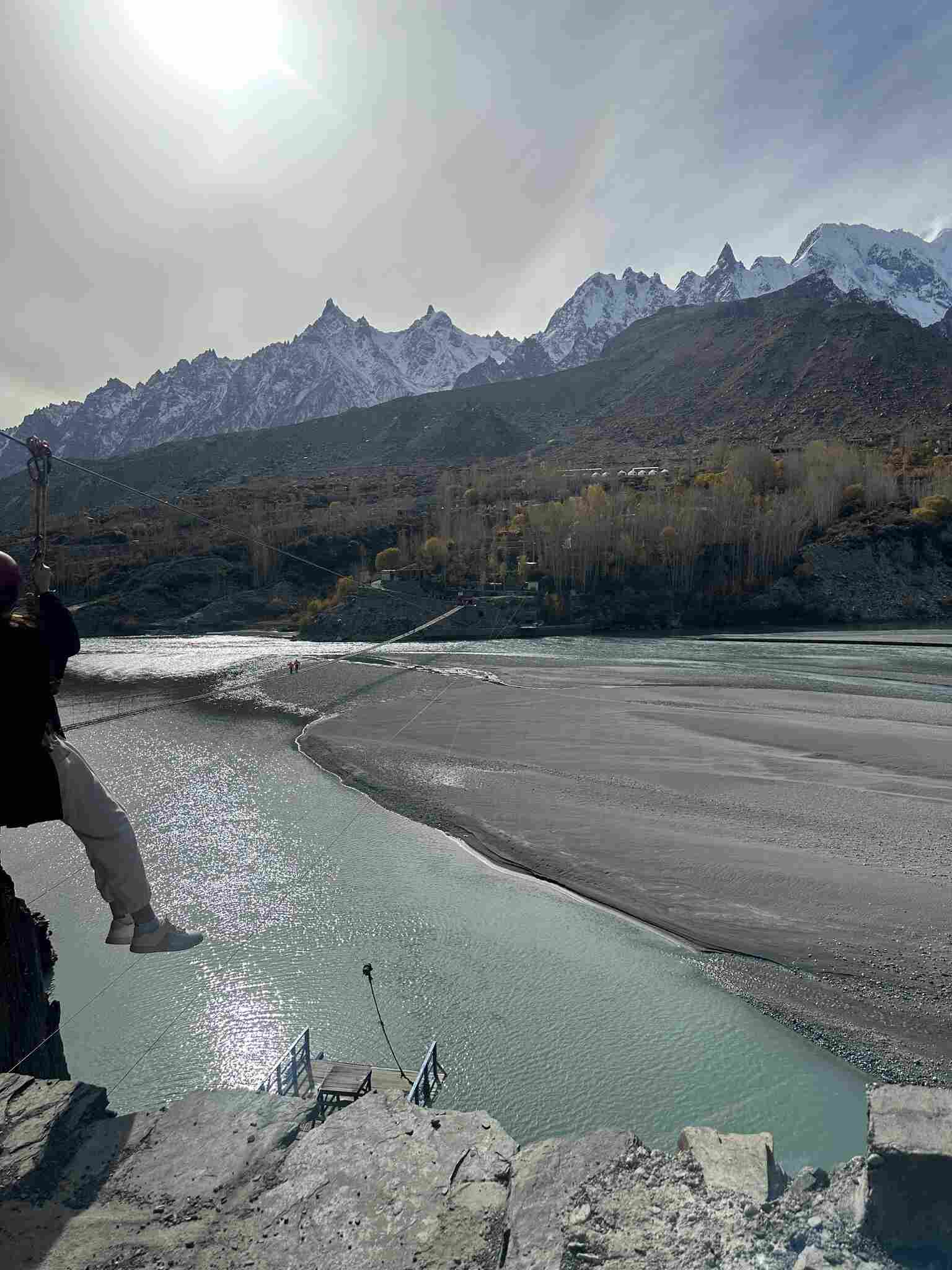
The zip line back costs Rs.1,000 per person for locals and Rs.2,000 per person for foreigners and is well worth the expense. You could either return the way you came or you could ride the zip line back.
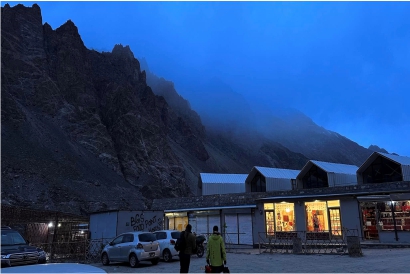
Walking to the bridge from the parking area is primarily downhill, and there are lots of places to stop and buy food and drinks. There are also souvenir shops. The stallholders were friendly and welcoming. I stopped for food on the way back, which provided a nice break on the uphill walk.
In addition to being a tourist attraction, the Zarabad hamlet residents use this bridge to travel to and from Hussaini village. There is a small entrance fee of Rs 300 per person to cross the bridge. The view of the Passu Cones against the backdrop is spectacular, making it ideal for photography.
Reaching the bridge is an adventure, with breathtaking scenery and winding roads setting the stage for the excitement to come.